
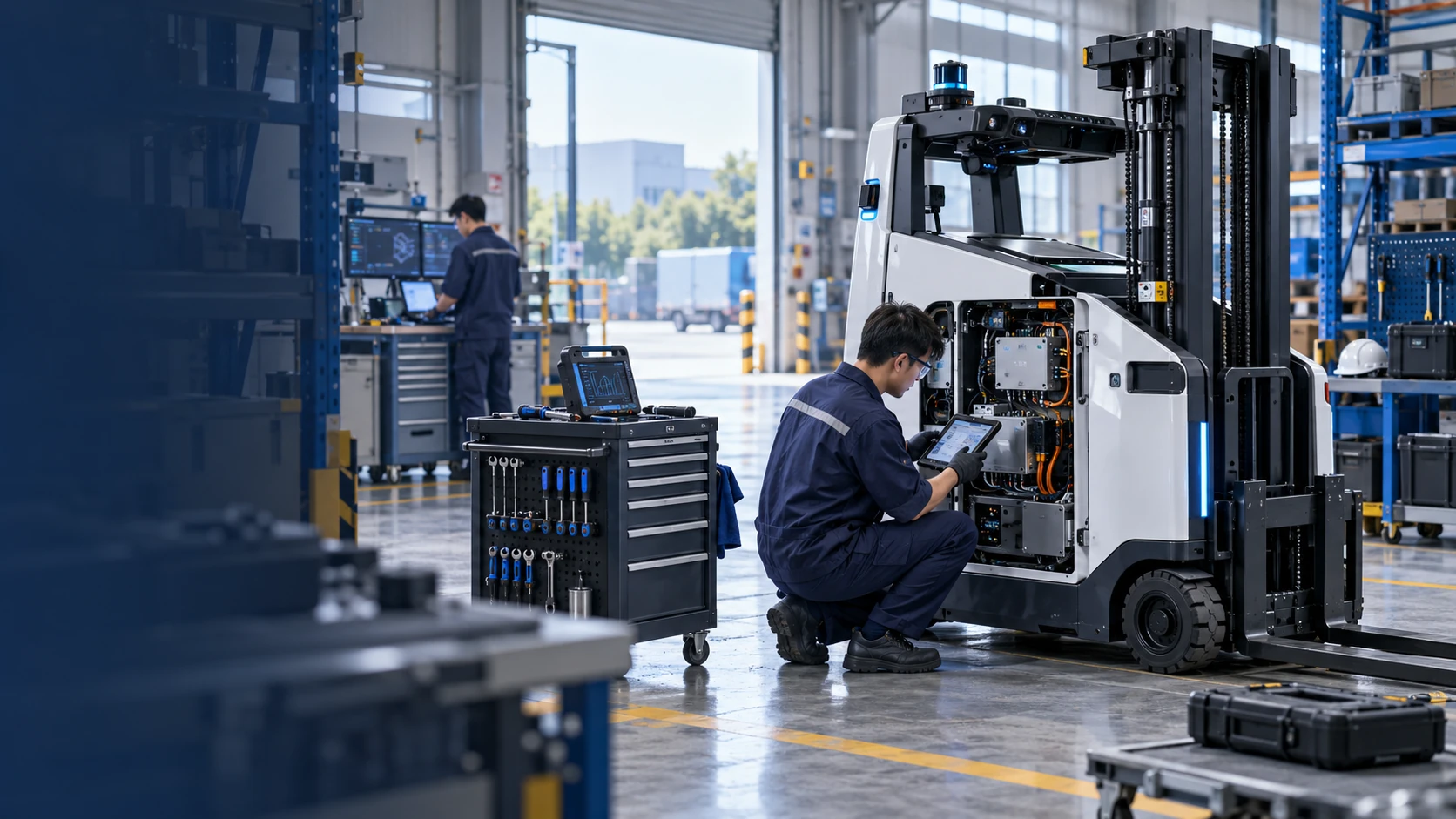
Support, every step of the way
Delivery is the start of an ongoing service. Our project and support teams assist with installation, commissioning, operator training and maintenance.
Dedicated project manager
A dedicated project manager coordinates implementation, on-site commissioning, training and handover.
Round-the-clock support
Our 24/7 service desk receives enquiries and fault reports, records the issue and coordinates support.
Follow-up & maintenance
Site visits, equipment inspections and maintenance help us identify and address issues during operation.
Technical training
Training covers equipment operation, routine checks and maintenance to help your team use the equipment correctly.
Service network
The group’s service network coordinates enquiries, maintenance and after-sales support.
Frequently asked questions
Common Issues in AGV Project Delivery
A clear acceptance process should connect the agreed requirements with site operating conditions. This article reviews recurring commercial and technical issues, including unrealistic pricing, limited engineering capability and insufficient communication.
What challenges should an autonomous forklift system address?
Autonomous forklifts need to address flexible workflows, navigation and safety in real facilities. The original article reviews common material-handling challenges and factors affecting the wider adoption of autonomous forklift systems.
AGV Daily Inspection and Maintenance Guide
Routine AGV maintenance includes checking for fluid leaks, inspecting forks and load backrests, examining wheels and fasteners, and verifying brakes. Battery connections, hydraulic oil levels, safety scanners, sensors and emergency functions also require regular checks. Follow the vehicle manufacturer’s maintenance instructions and use trained personnel.
Civil works, racking and stacker crane installation for automated warehouses
Automated warehouses require coordinated planning of the building, foundations, racking and stacker cranes. The original guide discusses equipment clearances, floor levels, foundation loads and installation procedures. Example clearances of 350–500 mm and a concrete grade of at least C30 are discussed; final requirements must be defined for the particular project by its engineers.
Tell us about your project
Whether you are building a warehouse, adapting a production line or improving a handling task, share your site conditions and operating goals with us.